Why £100,000 matters more than £125,140
The number most people know is £125,140, where the 45% additional rate starts 1. The number that does more damage is £100,000.
From £100,000 of adjusted net income, the personal allowance of £12,570 is withdrawn at £1 for every £2 earned above the line 2. By £125,140 it has gone entirely. Losing an allowance while also paying 40% on the income that removes it means the effective rate of income tax between those two figures is 60%. Add 2% employee National Insurance and it is 62% on every extra pound 1.
For parents the same £100,000 line switches off tax-free childcare and the funded childcare hours for working parents, because both are tested against each parent's adjusted net income 5,6. Child benefit has already been tapered away between £60,000 and £80,000 7.
Those thresholds are frozen. The Autumn Budget 2025 held the personal allowance, the higher rate threshold and the £125,140 additional rate threshold where they are until April 2031 15. Every pay rise between now and then moves you further into the bands rather than the bands moving with you.
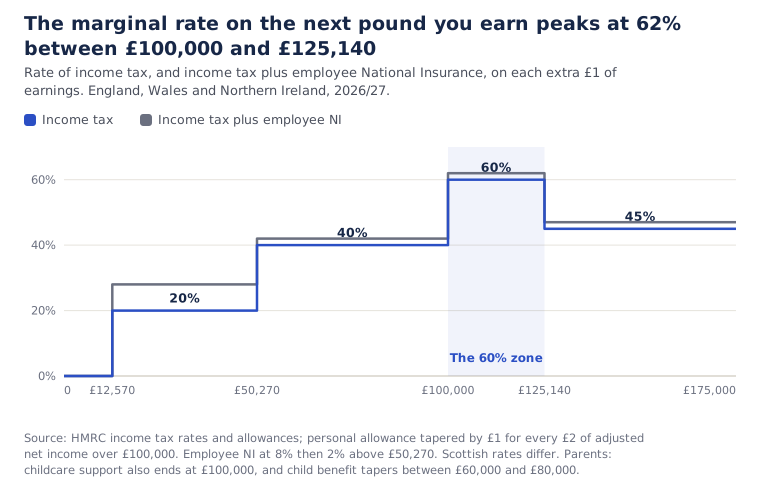
The 60% zone, worked through
Illustrative, employment income only, no other income, England, Wales and Northern Ireland.
At £100,000 your personal allowance is intact. At £110,000 it has fallen to £7,570. That £10,000 pay rise is taxed at 40%, which is £4,000, and it has also cost you £5,000 of allowance, which is taxed at 40% too, another £2,000. You keep £4,000 of the £10,000. Add National Insurance at 2% and you keep £3,800.
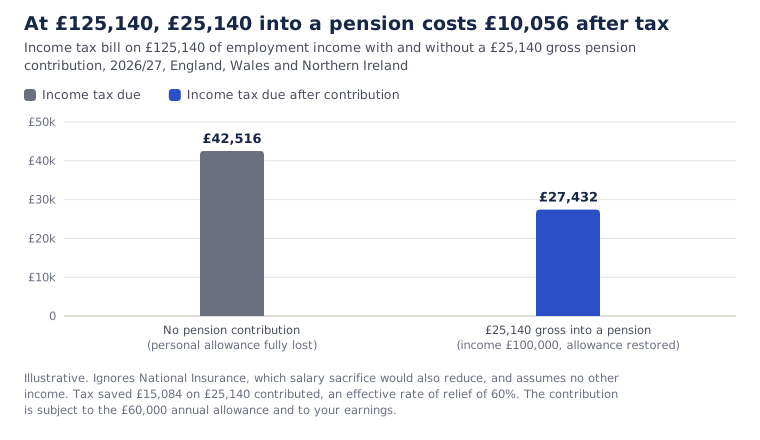
At £125,140 the allowance is gone. Income tax on £125,140 with no allowance is £42,516: £37,700 at 20% and £87,440 at 40% 1. From here the rate on the next pound drops to 45%, which is why people just over the line sometimes pay a lower marginal rate than people just under it.
"Adjusted net income" is the figure that matters for the taper and for childcare. It is your total taxable income less the gross value of your own pension contributions and Gift Aid donations 2,8. That definition is the reason the next chapter exists.
Pensions, the main lever
A pension contribution reduces adjusted net income pound for pound. For someone in the 60% zone that means every £1 contributed saves 60p of income tax, because it earns 40% relief and restores 20% of allowance at the same time 2,3.
The annual allowance is £60,000 a year, including any employer contributions 3. Unused allowance from the previous three tax years can be carried forward, provided you were a member of a pension scheme in those years 21. Your own contributions are limited to 100% of your earnings; employer contributions are not 21.
Above £200,000 of threshold income and £260,000 of adjusted income the allowance tapers, losing £1 for every £2 over £260,000 down to a floor of £10,000 at £360,000 4. Below £200,000 the taper does not apply at all, which is why the £150,000 earner and the £300,000 earner are in very different positions.
Salary sacrifice, where you give up salary and your employer pays the equivalent into your pension, also saves National Insurance for you and your employer 14. From April 2029 employer and employee NI will be charged on sacrificed contributions above £2,000 a year 15. That is two and a half years away; it does not change anything now, but it is worth knowing the window is dated.
If you pay into a personal pension out of taxed income, the scheme claims 20% for you. The rest, whether 20% or 25%, is not automatic. It is claimed through self assessment or by telling HMRC 3. Every year some higher earners leave it unclaimed.
What an adviser looks at: how much allowance is actually available once employer contributions and carry forward are counted, whether the taper bites, whether salary sacrifice is on offer, and how a contribution today fits with the lump sum allowance of £268,275 on tax-free cash later 16 and with pensions entering the inheritance tax net from April 2027 17.
Parents, the childcare cliff and child benefit
Tax-free childcare pays 20% on top of what you put into a childcare account, worth up to £2,000 per child per year 5. Working parents can also claim funded childcare hours from the age of nine months 6. Both stop if either parent's adjusted net income goes over £100,000 5,6. There is no taper: £100,001 loses the lot for that year.
AJ Bell calculated that a family with two young children losing both could forfeit around £29,000 a year of support, and that a £2,000 pay rise across the line could cost more than £27,000 once tax and the lost support are counted 19.
Because the test is adjusted net income, a pension contribution or a Gift Aid donation that brings the figure back under £100,000 restores eligibility 2,19. This is the single most common reason higher earners in their thirties and forties speak to an adviser, and the arithmetic is usually decisive one way or the other.
Child benefit works differently. The high income child benefit charge claws it back gradually between £60,000 and £80,000 of adjusted net income, at 1% of the benefit for every £200 over £60,000 7. Above £80,000 the charge equals the benefit. Many families opt out of receiving it, but registering for it still protects the non-earning parent's National Insurance record for the state pension 7.
What an adviser looks at: whether the £100,000 line can be held with pension contributions that you would want to make anyway, which parent's income is the problem, and what happens in years with a bonus.
Gift Aid and the other things that reduce adjusted net income
Gift Aid donations are grossed up by the charity and, for a higher or additional rate taxpayer, earn extra relief through your tax return 8. They also reduce adjusted net income by the gross amount 2. A £4,000 donation is worth £5,000 to the charity, costs a 45% taxpayer £2,750 after relief, and takes £5,000 off the figure used for the taper and childcare tests.
The other reducers are narrower: pension contributions, covered above, and trading losses for the self-employed. Things that do not reduce adjusted net income include ISA contributions, mortgage interest and most employee expenses. The list of what counts is short, and it is on gov.uk 2.
Savings and dividends when you pay 45%
Additional rate taxpayers have no personal savings allowance at all 10. Every pound of interest outside an ISA is taxed at 45%, and from April 2027 the rate on savings income rises by two percentage points across every band, to 47% at the top 15.
Dividend tax rose in April 2026 to 10.75% at the basic rate and 35.75% at the higher rate, with the additional rate unchanged at 39.35% 9,15. The dividend allowance is £500 9.
The ISA allowance is £20,000 a year per person, and interest, dividends and gains inside it are untaxed 11. From April 2027 no more than £12,000 of that can go into a cash ISA if you are under 65 15. For someone paying 45% on interest and 39.35% on dividends, the ISA is not a nice-to-have; it is the difference between keeping the return and keeping a little over half of it.
What an adviser looks at: whether cash is sitting outside an ISA earning taxable interest, whether both partners' allowances are being used, and whether the balance between cash, ISA and pension matches what the money is for.
Investing outside the wrappers
Once ISAs and pensions are full, investments sit in a general account and the tax follows the normal rules. Capital gains are taxed at 24% for a higher or additional rate taxpayer, with an annual exemption of £3,000 that cannot be carried forward 12. Dividends and interest are taxed as above.
Three rules do most of the work in a general account. Transfers between spouses and civil partners carry no capital gains tax, so a gain can be realised by whichever of you pays the lower rate 12. Losses offset gains, and unused losses carry forward if claimed within four years 12. And "bed and ISA", selling a holding in the general account and rebuying it inside the ISA, uses the exemption each year while moving money into the untaxed wrapper 11,12.
Venture capital schemes such as VCTs and EIS offer income tax relief in exchange for high risk and long lock-ins. They are not covered in this guide because they are specialist products, and any decision about them belongs with an adviser.
Couples, two sets of everything
Almost every allowance in this guide is per person. Two ISA allowances, two capital gains exemptions, two dividend allowances, and, if one of you earns less, a lower marginal rate on income-producing assets.
Income from an asset is taxed on the person who owns it. Because transfers between spouses and civil partners are free of capital gains tax, an income-producing investment can be moved to the partner with the lower rate, and the income is then taxed at that rate 12. A non-earning partner can also contribute up to £2,880 a year to a pension and receive basic rate relief, making it £3,600 3.
The marriage allowance, which lets one partner transfer part of their personal allowance, is not available where either of you pays above the basic rate 1.
What an adviser looks at: who owns what, whether the ownership matches the tax position, and whether both partners' pension and ISA allowances are being used rather than one person's being maxed out while the other's sits empty.
Pensions, your estate and April 2027
Higher earners are usually told to fill the pension first because it sat outside the estate for inheritance tax. That changes on 6 April 2027, when unused pension funds and most death benefits come into the estate, under the Finance Act 2026 which received Royal Assent on 18 March 2026 17. Transfers to a spouse or civil partner remain exempt 17.
That does not make pension contributions a bad idea; the income tax relief at 40% or 60% on the way in is untouched. It does mean the pension is no longer the automatic place to leave money you will never spend. For someone building a large pension in their forties, the plan for drawing it and the estate plan are now the same conversation.
The nil rate band is £325,000 and the residence nil rate band £175,000, both frozen to April 2031, and the residence band tapers away above £2m of estate, a figure that from 2027 includes pensions 15,17. Our estates guide covers the detail.
Scotland, self assessment and what this guide is not
Scotland. If you are a Scottish taxpayer the bands are different: 42% from £43,663, 45% from £75,001 and 48% above £125,140 13,20. The personal allowance taper and the £100,000 childcare test work the same way, so the 60% zone in Scotland is a 67.5% zone. Everything in this guide about pensions, ISAs, dividends and capital gains applies UK-wide.
Self assessment. Higher rate pension relief on personal contributions, higher rate Gift Aid relief and the child benefit charge are all dealt with through your tax return, or by telling HMRC directly 3,7,8. If you have never filed one and have made personal pension contributions, there may be relief you have not claimed.
What this guide is not. It is a description of the rules as they stand on 17 September 2026, with sources, written by an introduction service. It is not advice, and nothing in it is a recommendation to do anything. IFA Connect is not authorised or regulated by the Financial Conduct Authority. The advisers we introduce are. Whether any of the above applies to you, and in what order, is precisely what they are for.